Calm Is Not a Temperament: Engineering Reassurance Before the Bad Week Arrives
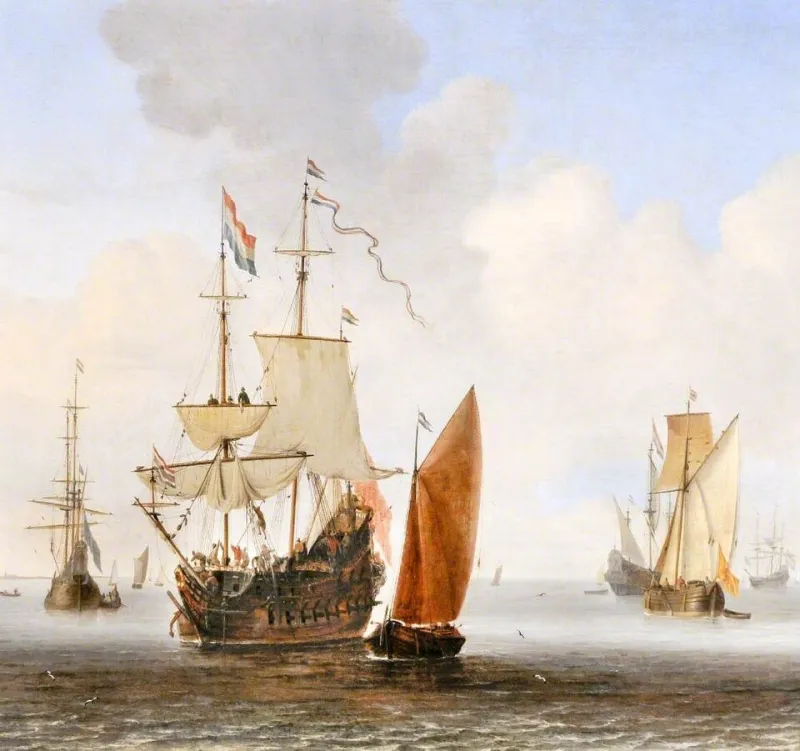
Photo: Willem van de Velde the Younger, Public domain, via Wikimedia Commons
There is a particular kind of organisation that looks calm on an ordinary Tuesday. Meetings start on time, the risk register is current, and the leadership team speaks about resilience with the easy confidence of people who have not recently been tested. It is a pleasant place to work. It is also, quite often, a place where the calm is a matter of weather rather than architecture.
The test arrives unannounced: a supplier fails, a regulator writes, a key system goes down on the day two senior people are abroad. What follows is not usually a collapse. It is something quieter and more expensive — a fortnight of improvisation, decisions taken by whoever was reachable, and a scramble to reconstruct what the compliance record actually said. The organisation survives. It simply does not recognise itself in how it behaved.
The quiet-week illusion
Most organisations assess their resilience in quiet weeks. The assessment is conducted by people who already know how things work, in conditions where nothing is competing for attention, and it produces a document that describes intent rather than capability.
This is where a useful distinction sits. Culture — the shared instinct to escalate, to ask, to slow down — is real and valuable. But culture is not a control. A control is something that operates when the person who designed it is unavailable. The argument here is not that culture matters less than leaders think. It is that culture is what remains visible when the underlying design is sound, and what gets blamed when the design is not.
Four things steady organisations actually build
Delegated cover that is written down
In calm organisations, the question “who is in charge if she is on a plane?” has a documented answer, dated and signed. It covers the second and third tier, not only the executive. It is reviewed when roles change, which is more often than most delegation schedules are updated.
Decision rights that are specific
“The board approves anything significant” is not a decision right; it is an avoidance of one. Effective arrangements define thresholds — financial, reputational, regulatory — and state who may commit the organisation at each. Vague authority produces either paralysis or unrecorded risk-taking, and usually both in the same incident.
Escalation routes that have been used
An untested escalation route is a diagram. Organisations that stay calm in bad weeks have usually walked the route in a good one: a tabletop exercise, a live test of the out-of-hours contact list, a deliberate simulation of a notification to insurers. The value is not in the rehearsal. It is in discovering, while nothing is at stake, that two numbers are wrong and one approver left last spring.
A record that can be retrieved under stress
Compliance evidence is often held in a form that assumes a patient reader with a quiet afternoon. The realistic test is blunter: can a named person produce the relevant policy, decision log, training record or board minute within a working day, without asking a former colleague? If the answer depends on someone's inbox, the record is a hope.
Why this is harder than it sounds
Two objections tend to arise. The first is that formalising these arrangements will slow the organisation down. In practice, ambiguity is what slows organisations; clear thresholds and named deputies remove the meeting that exists solely to work out who should decide.
The second objection is that resilience has become a word used in tenders. There is something in that. The operational resilience expectations that took effect in the UK in 2025 pushed important business services into sharper focus, and a certain amount of paperwork has followed, some of it more decorative than useful. But the underlying question — can you keep delivering when something goes wrong, and can you prove how you decided? — is not a compliance artefact. It is the thing itself.
What good looks like in a bad week
The contrast is rarely dramatic from the outside. Both organisations brief staff, both open an incident log, both call their advisers. The difference is in the texture of the first seventy-two hours.
In the engineered organisation, someone is already accountable and does not need to be found. The insurer is notified within the terms of the policy because the notification duty was assigned rather than assumed. The legal or compliance position can be evidenced from documents produced that morning. Decisions are logged as they happen, not reconstructed afterwards. People are tired, but they are not improvising governance.
In the other organisation, the same events produce a week of good intentions in a group chat, a coverage question nobody can answer, and a later conversation about whether the right person was told soon enough.
A year-end review in eight questions
Before the new year, put these to the leadership team and record the answers with a date and an owner. One page is sufficient; honesty is the constraint, not space.
- Who holds delegated authority for each of our critical operations, and is that documented for the second and third tier?
- What are our financial, regulatory and reputational decision thresholds, and who may commit the organisation at each?
- When was the out-of-hours contact list last tested, and by whom?
- Who notifies insurers, regulators and key clients, and within what period?
- Can we produce our current policies, board minutes and training records within one working day, without assistance?
- When did we last run an exercise that involved people outside the senior team?
- Which single failure — supplier, system or person — would cause the most disruption next quarter, and what have we done about it since January?
- If the most experienced person in the room were unavailable for a fortnight, what would stop?
Most organisations will find two or three uncomfortable answers. That is the point of asking in November rather than in the middle of an incident.
Reassurance that is evidenced
The pleasant Tuesday will come round again. The question worth asking is whether the calm on that day is the product of a good week or a good design. Steadiness that can be demonstrated — through named deputies, written thresholds, walked routes and retrievable records — is a control. Steadiness that can only be described is a hope, however well-dressed. Cover that holds, in the end, is a matter of engineering.